19% off
Land Rover
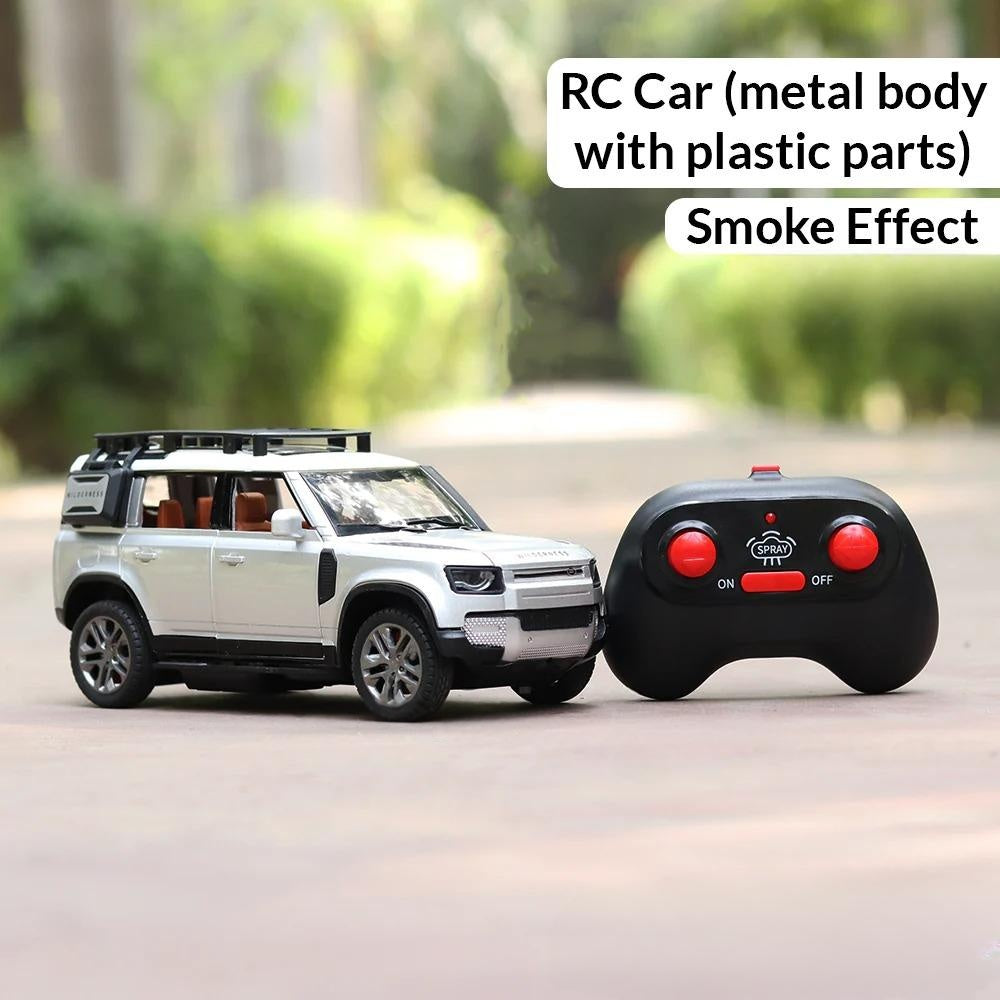
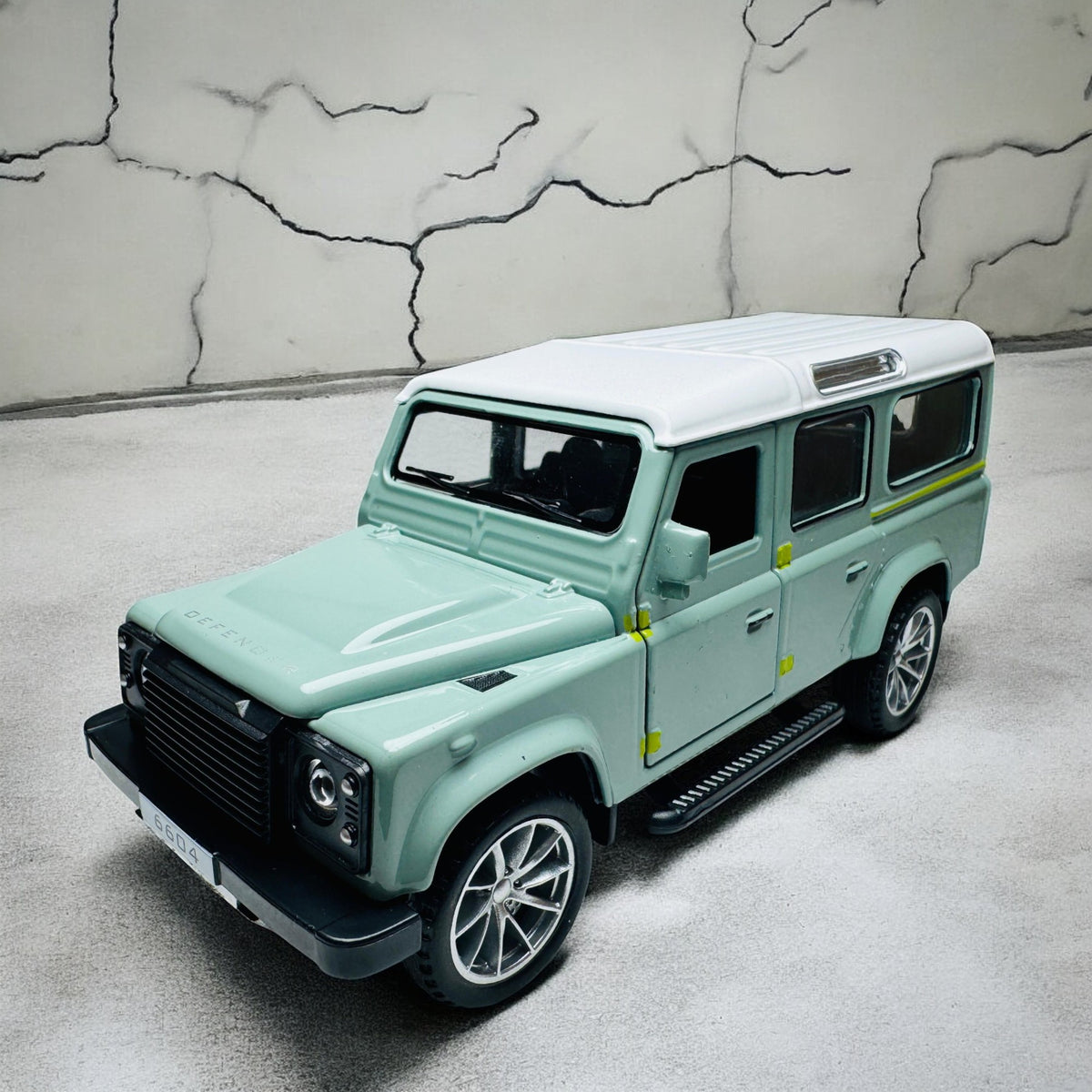
Defender RC Diecast Car with Smoke and Opening Doors
(106)
₹2,899₹3,59819% off
Five Defenders: the new 110 in two sizes, the classic, and two that drive. Compared side by side so you can pick the right one.
5 models · from ₹1,499 · free shipping
| Model | Scale | Length | Opens | Lights | Drives | Licensed | Price |
|---|---|---|---|---|---|---|---|
| Defender RC Diecast Car with Smoke and Opening Doors | — | — | ₹2,899 | ||||
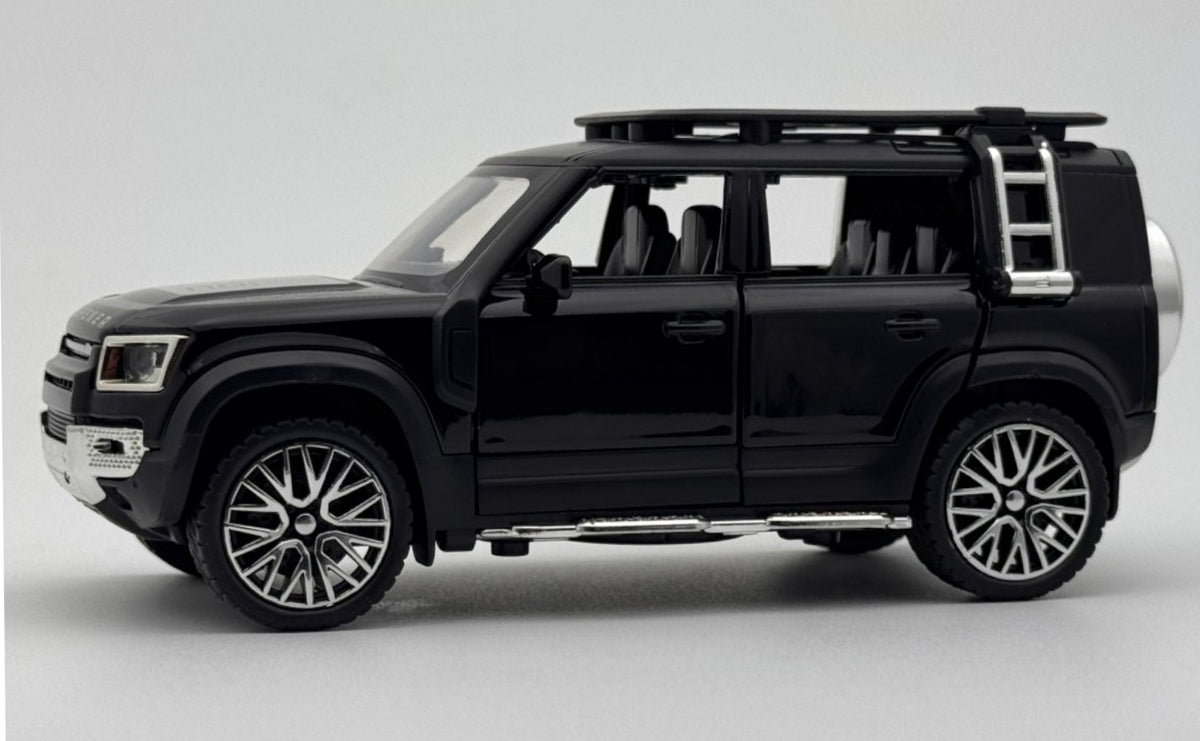
| Land Rover Defender 110 1:24 Diecast Model | 1:24 | 18 to 21 cm | ₹1,499 | ||||
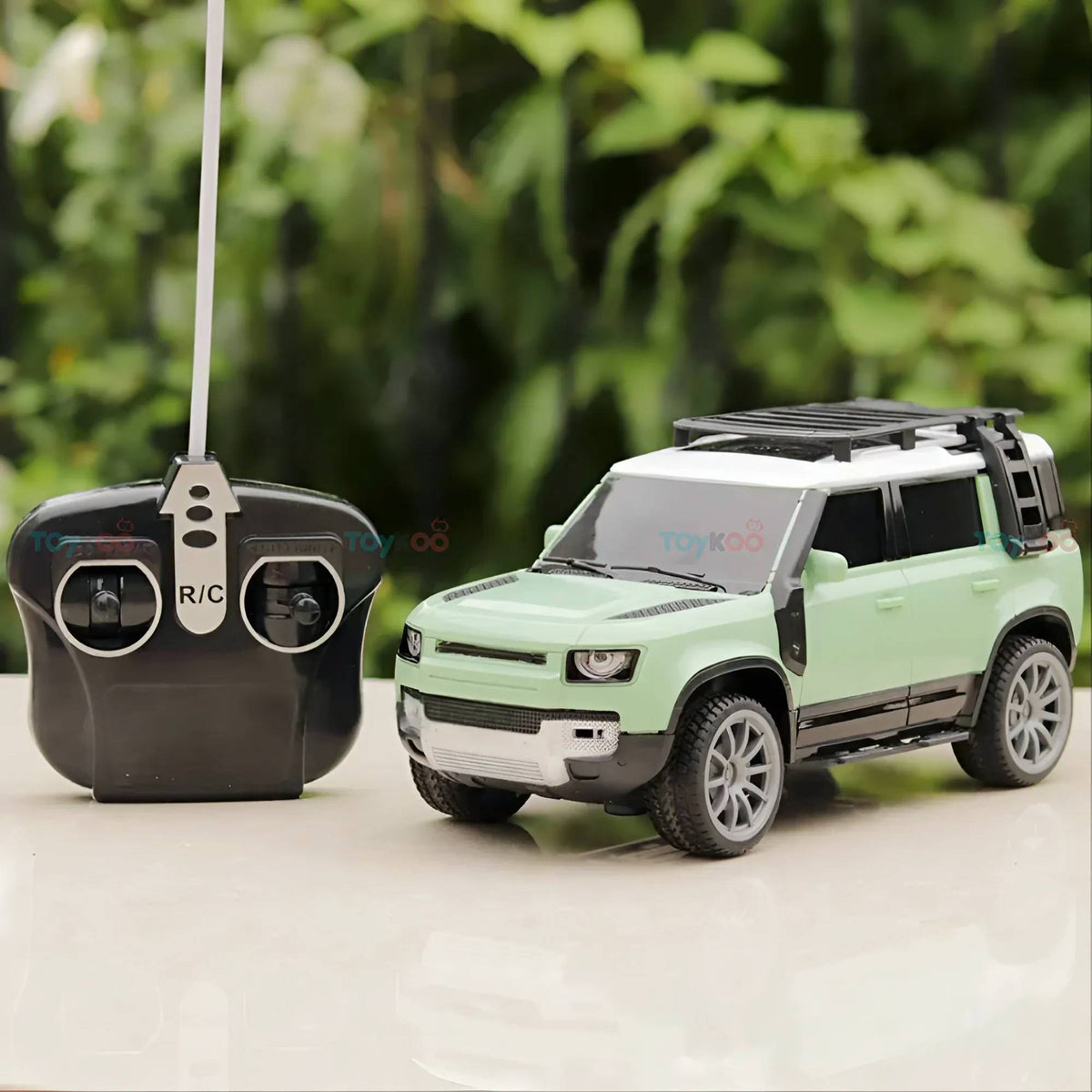
| Defender 1:16 Remote Control Car | 1:16 | 26 to 30 cm | ₹1,599 | ||||
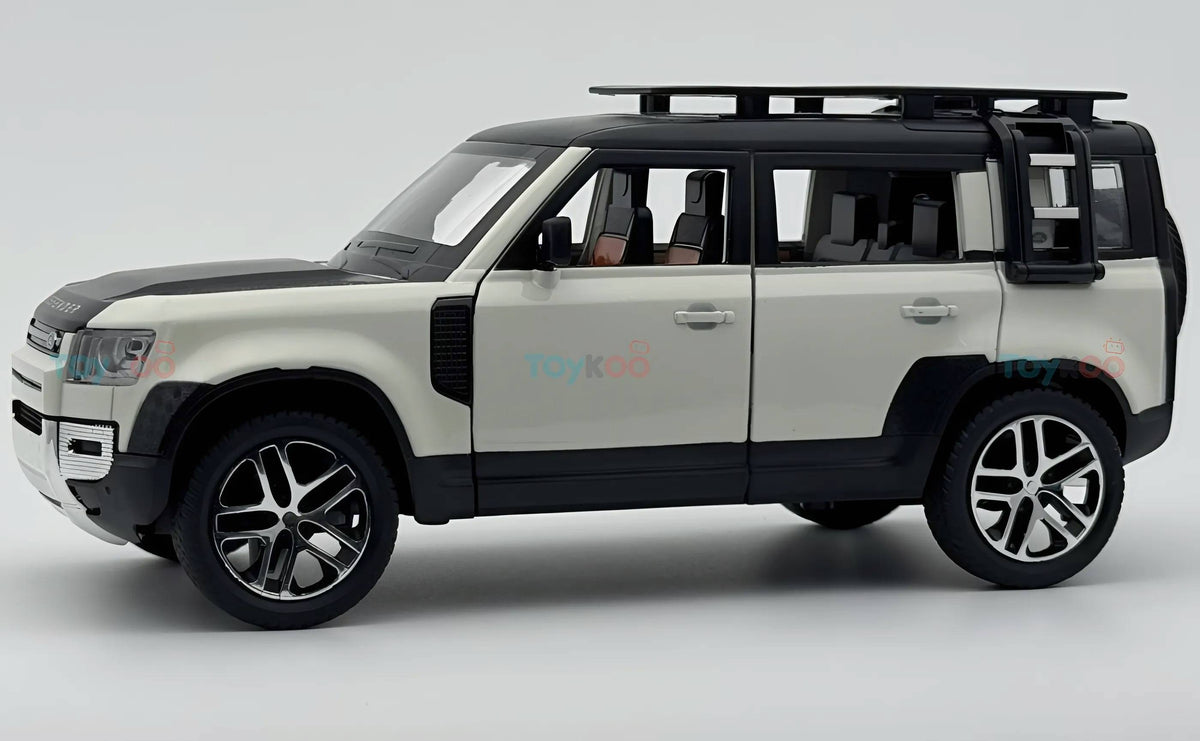
| Land Rover Defender 110 1:18 Diecast Model | 1:18 | 25 to 28 cm | ₹2,499 | ||||
| Classic Land Rover Defender 110 1:24 Diecast Model | 1:24 | 18 to 21 cm | Pull-back | ₹1,599 |
Land Rover
Land Rover
Land Rover
Land Rover
Land Rover
The Defender is the most searched-for toy car in India and the model we sell most of, so it has earned its own page. There are five here. Two are the new Defender 110 that launched in 2020: an unlicensed 1:24 with a roof rack and pull-back motor for ₹1,499, and the officially licensed 1:18 with the working side-hinged rear door, lights and steering. One is the classic boxy Defender that Land Rover built almost unchanged from 1948 to 2016. And two are remote control: a metal-bodied Defender with opening doors and a smoke effect, and a plastic-bodied 1:16 for younger children.
The table above compares them on the things that matter: size, what opens, whether the lights work, whether it is licensed, and price. Below the grid is a longer guide on old Defender versus new, static versus remote control, and which to buy for a child.
The new Defender is the 2020 car: rounded corners, the flat roof with Alpine windows, the side-mounted spare, a roof rack and side ladder on most models here. It is the car people in India see on the road and photograph, and it is the one to buy for anyone under forty. The classic Defender is the riveted aluminium box Land Rover built from 1948 to 2016 with barely a change: flat windscreen, exposed hinges, a spare on the rear door. It is the one to buy for anyone who drove one, or whose family had one on a farm or in the army.
In 1:24 the two are the same price and the same size, and they look right together. Most customers who buy one end up with the other.
The static models are the ones that matter to a collector: the 1:24 with its roof rack and pull-back motor, and the licensed 1:18 with the working rear door and lights. They sit on a shelf and they are built to be looked at. The remote control Defenders are for driving. The metal-bodied RC has opening doors, lights and a smoke effect from the exhaust, and it is the one that can do both jobs, drive on the floor and sit on the shelf between runs. The plastic 1:16 RC is lighter, slower and cheaper, and it is the one for a five-year-old.
One Defender here is officially licensed by Jaguar Land Rover, and it shows. The 1:18 is built from Land Rover's own data, so the roof height, the rear overhang and the wheel arches are correct rather than approximated. The rear door is side-hinged with the full-size spare on it and opens onto a load bay with the tie-down rails; all four doors open onto the Defender's exposed-structure dashboard; the bonnet lifts; the front wheels steer; and a button brings up the headlamps and tail lights with an engine sample. It weighs close to a kilogram. It costs ₹2,499, which is a third of what a licensed 1:18 Defender sells for through import channels.
Six and up: the 1:24 new Defender 110. It has the pull-back motor, the lights, a metal body that shrugs off a drop from a table and a roof rack that children immediately load with other toys. Under six: the plastic 1:16 remote control Defender, which has no small parts to lose and a speed set for a living room. Teenagers: the metal RC with smoke, or the licensed 1:18 if they are the collecting kind. Every one ships free with a GST invoice.